


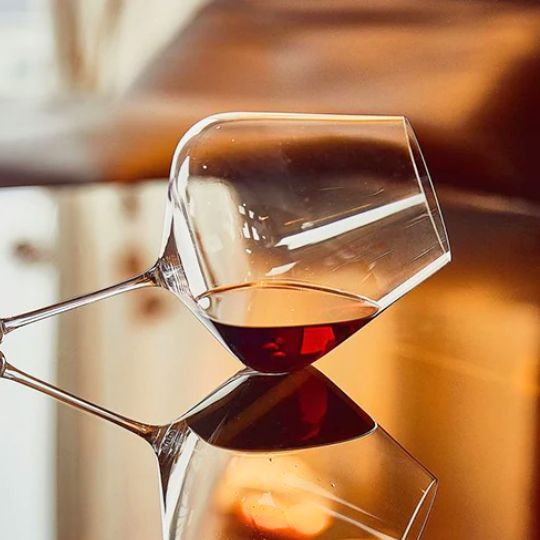
Red Wine
-

Chateau La Mission Haut Brion Chateau La Chapelle La Mission Haut Brion
PRE-ORDER 2011 | JS 92 This is very, very pretty, with plum, chocolate and cedar, plus hints of sweet tobacco. Full, very soft tannins. Savory and juicy. 2013 | WE 90 This is a soft wine, with ripe blackberry flavors and ample acidity. Perhaps the fruit tannins are too extracted, as a bit more structure would be welcome. 2015 | JS 94 Lots of currants, spices and fresh herbs follow through to a full body that's tight and silky. Hints of cream and vanilla. Savory and salty. Shows structure and intensity as the second wine of La Mission. 2016 | WA 94 Medium to deep garnet-purple colored, it absolutely sings of red roses, black tea and tilled black soil with a core of crushed blackberries, Morello cherries and cassis plus a hint of cinnamon stick. Medium-bodied, the palate delivers a great intensity of ripe black berries and floral layers, framed by soft, silken tannins and seamless freshness, finishing long and mineral laced. 2017 | JS 92 Lots of crushed berries and violets with sandalwood on the nose. Some herbs. Full body and firm, chewy texture. Slightly austere tannins. Long and chewy. 2019 | JD 96 It might be the second wine of the vintage and has plenty of classic La Mission sexiness and opulence as well as textbook notes of sweet red and black currants, tobacco leaf, exotic spice, acacia flowers, and lead pencil. Full-bodied, round, expansive, and powerful, yet also light on its feet and flawlessly balanced, it's a stunning Pessac in its own right to enjoy over the coming 20 years or so. 2020 | JS 96 A powerful 2020 for a second wine with blackberry, black olive and blueberry aromas and flavors. Blackcurrants as well. It’s full-bodied yet racy and structured with a long and intense finish. 2021 | JD 94 Black raspberries, dried flowers, tobacco, violets, and a beautiful spicy character emerge from the 2021 Château La Mission Haut-Brion, a pure, medium-bodied, incredibly polished, elegant Péssac-Léognan that has fine tannins, an utterly seamless, graceful mouthfeel, no hard edges, and a gorgeous finish. About Winery Produced in small quantities, this second wine is a gateway to the world of Château La Mission Haut-Brion. Its name is a nod to the chapel of La Mission Haut-Brion, built by Lazarist priests in 1698.
$161.97 - $202.97
-

Chateau Smith Haut Lafitte Chateau Smith Haut Lafitte
PRE-ORDER 2014 | WE 97 The 2014 red is described as a "large" wine with rich blackberry, plum, and cedar notes, offering intense, polished tannins. It is considered to have great aging potential but entered its drinking window around 2021–2023. 2021 | D 96 The 2021 shows high intensity with a velvety, elegant texture, displaying refined tannins and a long, energetic finish. About Winery Château Smith Haut Lafitte's history spans centuries, starting in 1365 with the Verrier Du Boscq family planting vines on a gravelly plateau named Lafitte. In the 18th century, the Scottish merchant George Smith acquired the property, adding his name and building the Carthusian monastery. Later, Lodi Duffour-Dubergier, Mayor of Bordeaux, elevated the estate to Grand Cru Exceptionnel status in 1842. The Louis Eschenauer company purchased the estate in 1958, and in 1990, Daniel and Florence Cathiard bought it, investing heavily in both the property and the wines. At the end of the 18th century, the Archbishop of Bordeaux was dispossessed of his property. The papal vineyard became part of the public domain. 8 June 1937 was a dark day in the vineyard's history, when a violent hailstorm destroyed virtually the entirety of the estate. Two years later, Paul Montagne bought it and gradually brought it back to life. Thanks to his efforts, the vineyard returned to its former rank and stood up to the surge in urbanization. His descendents, Léo Montagne and Bernard Magrez, perpetuate this secular tradition so that Chateau Pape Clément wines continue to delight the wine-lovers of today and tomorrow.
$228.97 - $257.97
-

Chateau Pape Clement Chateau Pape Clement
2015 | JS 99 Rich, complex, expressive; benchmark vintage. 2016 | JS 98 Stunning concentration, ripe blackcurrants, super-long finish. 2018 | JD 99 Powerful, textured, with fruit richness and freshness. 2019 | JD 98 Dense purple hue, cassis, graphite, tobacco; long aging potential. 2020 | Vinous 98 Muscular, blackberry, iodine, graphite; cellar-worthy. 2022 | JS 98 Structured, perfumed, powerful tannins; one of the most transparent Pape Cléments. About WineryChateau Pape Clément owes its name to its most illustrious owner. A man of the cloth born in 1264, Bertrand de Goth became Bishop of Comminges, in the Pyrenees Mountains, at the age of 31; he later became Archbishop of Bordeaux in 1299. He then received as a gift the property in Pessac, the Vineyard de La Mothe. Taken by a passion for the vine, he continually took part personally in equipping, organizing and managing the domain in accordance with the most modern and rational practices. Nevertheless, on 5 June 1305 the cardinals met in a conclave in Pérouse and appointed him to succeed Pope Benedict XI, who had passed away prematurely after only eleven months of reign. Bertrand de Goth took the name of Clement V. Supported by Philip IV, it was he who decided in 1309 to move the papal court to Avignon, thus breaking with Rome and its battles of influence. During this same period, the weight of his responsibilities led him to relinquish his property, giving it to the Archbishop of Bordeaux. Henceforward, the vineyard was to be known to posterity under the name of this enlightened pope. Management under the clergy brings modernity The grateful Church perpetuated Pope Clement's work. Each archbishop in turn turned to modernity and technical progress, to the point of the wine estate becoming a model vineyard. In addition to especially early harvests, which remain one of its special characteristics, Chateau Pape Clément is without a doubt the first vineyard in France to align vine stock to facilitate labour. At the end of the 18th century, the Archbishop of Bordeaux was dispossessed of his property. The papal vineyard became part of the public domain. 8 June 1937 was a dark day in the vineyard's history, when a violent hailstorm destroyed virtually the entirety of the estate. Two years later, Paul Montagne bought it and gradually brought it back to life. Thanks to his efforts, the vineyard returned to its former rank and stood up to the surge in urbanization. His descendents, Léo Montagne and Bernard Magrez, perpetuate this secular tradition so that Chateau Pape Clément wines continue to delight the wine-lovers of today and tomorrow.
$132.99 - $345.97
-

Chateau La Mission Haut Brion Chateau La Mission Haut Brion
PRE-ORDER Chateau La Mission Haut Brion Château La Mission Haut-Brion is a world-renowned winery located in the prestigious Pessac-Léognan appellation in the Bordeaux region of France. It holds a special place in the history of Bordeaux wines due to its exceptional quality and long-standing heritage. The estate is known for producing top-tier red wines, and its wine is often regarded as one of the most sought-after in the region.
$369.97 - $1,247.97
-

Chateau Haut Brion Chateau Haut Brion
PRE-ORDER 2009 | WA 100 it offers up a sensational perfume of subtle burning embers, unsmoked cigar tobacco, charcoal, black raspberries, wet gravel, plums, figs and blueberries. There is so much going on in the aromatics that one almost hesitates to stop smelling it. However, when it hits the palate, it is hardly a letdown. This unctuously textured, full-bodied 2009 possesses low acidity along with stunning extract and remarkable clarity for a wine with a pH close to 4.0. 2011 | WA 95 a classic nose of subtle smoldering embers, warm rocks, black currants, new saddle leather, spice box and high quality, unsmoked cigar tobacco. The color is a dense ruby/purple to the edge, and the wine cuts a serious as well as broad swath across the palate. The most amazing aspect of this terroir is that the wine, despite all its power and richness, literally dances on the palate, as if it were a 90 pound ballerina. 2017 | JS 98 This will be a magnificent wine. Its structure, acidity and richness all show considerable potential. A crisp edge contrasts with the concentration and density that comes from the swaths of fruit. Wood aging has opened out the tanginess of a wine that will age over many years 2020 | JD 100 Revealing a deep ruby/plum hue, the 2020 exhibits extraordinary aromatics of ripe black fruits, scorched earth, cold fireplace, and acacia flowers. An absolute blockbuster on the palate, this structured, full-bodied, massively concentrated Pessac builds incrementally, with ultra-fine tannins, a deep, layered mid-palate, and a great, great finish. 2021 | WA 96-98 A candidate for the title of wine of the vintage, the 2021 Haut-Brion unwinds in the glass with aromas of rich red and black fruit mingled with notions of cigar wrapper, licorice, black truffles, loamy soil and burning embers. Full-bodied, deep and concentrated, it's elegant and multidimensional, with superb depth at the core, lively acids and ultra-refined tannins. About Winery Château Haut-Brion's history spans five centuries, starting with Jean de Pontac's acquisition of the domain in 1521. He defined the estate's vineyards and built the château in 1549. The property was further developed by his descendants, and its wines gained renown among British aristocrats and authors, including Samuel Pepys, who wrote about them in 1663. Thomas Jefferson also visited and praised the estate's wines. In the 1930s, the property was acquired by the Dillon family, and is still managed by the Dillon family today.
$679.95 - $1,502.97
-

Chateau Pichon Longueville Chateau Pichon Comtesse Reserve
PRE-ORDER About Winery The Estate was founded in the late 17th Century. This period was known as the Grand Siecle, or "great century", in reference to Louis XIV's 1661 accession to the French throne. In 1689 Pierre Desmezures de Rauzan, an influential wine merchant and steward of the prestigious Latour and and Margaux estates, bought plots of vines close to the Latour estate to create Enclos Rauzan. These vines were part of his daughter Therese's dowry when she married Baron Jacques Pichon de Longueville in 1694, the year in which the Pichon Baron estate was founded. An illustrious estate, with an enduring reputation, was born. It remained in the same family for generations. In 1850 the property was divided in two. Baron Raoul Pichon de Longueville's section became the Pichon Baron estate. The second section, belonging to his three sisters, became Pichon Comtesse. Baron Raoul was proud of his prestigious property, and in 1851 he commissioned the imposing chateau inspired by Renaissance architecture that we know today. This uniquely charming and romantic chateau, with its two emblematic turrets, has stood proudly at the vineyard's heart ever since. During the Universal Exhibition of 1855, the wine was classed as a Second Grand Cru Classe according to the ranking system requested by Emperor Napoleon III, who wished to showcase Bordeaux's great wines. In 1933, the Pichon de Longueville family sold the property to the Bouteiller family, who managed the chateau for over 50 years. In 1987 the estate was bought by AXA Millesimes, whose aim is to enable great wines from the vineyards with a glorious past to achieve their full potential. An architectural competition was launched in collaboration with the Paris Pompidou Centre to provide the estate with new operational buildings. The comprehensive reconstruction of the fermenting room and cellar, and renovation of the chateau, began in 1988. Since then, the 19th century chateau's image has been
$124.97 - $135.97
-

Les Forts de Latour Les Forts de Latour
PRE-ORDER 2000 | V 95 The 2000 vintage is described as having a deeply perfumed, floral, and precise bouquet. It delivers intense black fruit, mint, and tar notes, with a concentrated finish that shows great maturity. 2003 | JS 93 Ripe, opulent, and opulent with notes of cold steel, blackcurrants, and plum. It is riper than the 2000 vintage due to the hot 2003 summer. 2004 | D 94 Deep ruby color with aromas of blackcurrant, graphite, pencil lead, and cedarwood. 2005 | V 94 Open-knit yet deep, featuring structured, supple fruit. Perfumed with hints of cedar, tobacco, smoke, and red berries. 2006 | WA 92 Rivaling classified growths with a profile of blackberry, tobacco, and mineral notes. It is now drinking well but still holds strong, structured tannins for potential future aging 2009 | WA 96 Rich, opulent and wonderfully velvety in the mouth 2010 | WA 97 Intense cassis, graphite, blackberry, and dark chocolate, with a powerful, solid, and tannic structure. 2011 | WE 94 The 2011 vintage is characterized by a "refined bouquet" with black fruit, cedar, and a touch of Pauillac mintiness. 2012 | JD 93 The 2012 blend is composed of approximately 76% Cabernet Sauvignon, 22% Merlot, and 2% Petit Verdot. It is praised for its elegance, fine tannins, and a strong, classically structured Pauillac profile with hints of mint, pencil shavings, and mineral. 2013 | WA 91 Soft, approachable, and "fresh" due to the vintage, it lacks the deep power of better years but offers a "classic" Pauillac savory character. 2014 | JS 94 Soft, approachable, and "fresh" due to the vintage, it lacks the deep power of better years but offers a "classic" Pauillac savory character. 2015 | WE 95 The 2015 vintage is characterized as a blend of 63% Cabernet Sauvignon, 35.6% Merlot, and small amounts of Petit Verdot and Cabernet Franc. 2016 | V 96 Notes of blackcurrant, violets, cedar, tobacco, and crushed rocks, with excellent freshness and a long,, powerful finish. 2017 | JS 95 The wine is noted for being "super-impressive" and "sculpted," with a balance of tension and power. 2018 | JS 95 Opulent and structured with blackcurrant, boysenberry, graphite, and tobacco. About Winery Château Latour, a renowned Bordeaux winery, has a rich history spanning centuries. Its name comes from a fortress tower built in the 14th century, used for defense during the Hundred Years' War. The estate, known for its powerful and complex red wines, has seen various owners throughout its history, including the Segur family, who held it for almost 300 years. Today, his daughter Saskia de Rothschild represents the 6th generation of the family at the head of the winemaking properties.
$392.97 - $531.97
-

Le Petit Mouton de Mouton Rothschild Le Petit Mouton de Mouton Rothschild
PRE-ORDER About Winery Chateau Mouton Rothschild, a Premier Cru Classé from the Bordeaux region and one of the world's greatest wines, is owned by Baroness Philippine de Rothschild. The estate includes 205 acres of vines at Pauillac planted with Cabernet Sauvignon (77%), Merlot (11%), Cabernet Franc (10%) and Petit Verdot (2%). In 1853, Baron Nathaniel de Rothschild bought Chateau Brane-Mouton. In 1922, his great-grandson Baron Philippe de Rothschild (1902-1988) decided to take the future of the estate into his own hands. His 65 years at Mouton bear witness to the strength of his personality, his spirit of enterprise and his sense of innovation. In 1922, he was the first to introduce chateau bottling. In 1926, he built the famous Grand Chai, the majestic 100-meter first year cellar, which has become a major attraction for visitors to Mouton. 1945 marked the start of a fascinating collection of works of art, created every year for the Mouton label by famous painters. In 1973, after a twenty-year battle, Baron Philippe obtained a revision of the 1855 classification and Mouton was officially recognized as a First Growth. In 1988, Baroness Philippine de Rothschild succeeded her father Baron Philippe. She has become the guarantor of the quality of an illustrious wine whose motto proudly proclaims, "First I am, second I was, I Mouton do not change."
$427.97 - $531.97
-

Chateau Pontet Canet Chateau Pontet Canet
PRE-ORDER 2013 | WE 95 An aromatic, delicate, and supple wine for the estate, showing black fruit, mineral notes, and spices. 2015 | JS 98 The wine is described as powerful, complex, and refined, exhibiting a blend of black cherry, blackcurrant, and savory spice. 2016 | WE 100 Deep, dark, and complex, with exceptionally pure fruit and a dense, yet elegant structure. 2017 | WA 96 Elegant and refined with a "slimmer" profile compared to the 2016 or 2018 vintages. Features notes of black currants, black raspberries, plum, violet, espresso, and graphite. 2020 | JS 98 The wine has a deep color with purple reflections and an expressive, airy nose of blackcurrant, peonies, and licorice, while the palate is generous, full, and creamy, with acidity and tannins blending seamlessly to create an upright character, finishing long with lingering notes of smoke, black fruit, and mint. 2021 | WE 97 Medium-bodied, focusing on purity of fruit, fine-grained tannins, and a fresh, mineral-driven finish. About Winery Chateau Pontet Canet Pauillac 5th Grand Cru Classé, has enjoyed an irresistible rise to become one of the Médoc's most emblematic names. Managed by Justine and Alfred Tesseron, Château Pontet-Canet has established itself as one of the pioneers of biodynamic viticulture in the Pauillac appellation, with results that exceed all expectations. Vintage after vintage, the estate has established itself as one of the finest references on Bordeaux's Left Bank.
$216.97 - $311.97
-

Chateau Pichon Longueville Chateau Pichon Longueville Comtesse de Lalande
PRE-ORDER 2009 | JS 97 Blackberry, cassis, violet, pencil lead, and smoky new wood. Ripe and hedonistic, balancing muscular structure with the "softest, juiciest fruit". 2010 | D 100 Powerful, concentrated, and tannic, yet polished and silky. It combines intense fruit (cassis, blackberry) with savory, earthy notes (cedar, tobacco). 2015 | JS 97 Described as "supremely elegant" and "seductive," featuring polished tannins, fine-grained structure, and remarkable purity. 2016 | JD 100 Powerful yet elegant and structured, characterized by silky tannins, high concentration, and remarkable freshness. 2018 | WE 98 Described as a "monster of a wine" with exceptional depth, balancing powerful tannins with elegance. 2019 | D 98 Intense blackcurrant, damson plum, liquorice, and cedar, with highly polished, silky tannins. 2020 | V 99 Opulent yet structured with "silky" tannins, a deep purple color, and notes of cassis, cedar, and savory tobacco. 2021 | V 98 It is described as a "towering" and "dazzling" wine, noted for its high Cabernet Sauvignon content, fine-grained tannins, and a long, mineral finish. About Winery The Estate was founded in the late 17th Century. This period was known as the Grand Siecle, or "great century", in reference to Louis XIV's 1661 accession to the French throne. In 1689 Pierre Desmezures de Rauzan, an influential wine merchant and steward of the prestigious Latour and and Margaux estates, bought plots of vines close to the Latour estate to create Enclos Rauzan. These vines were part of his daughter Therese's dowry when she married Baron Jacques Pichon de Longueville in 1694, the year in which the Pichon Baron estate was founded. An illustrious estate, with an enduring reputation, was born. It remained in the same family for generations. In 1850 the property was divided in two. Baron Raoul Pichon de Longueville's section became the Pichon Baron estate. The second section, belonging to his three sisters, became Pichon Comtesse. Baron Raoul was proud of his prestigious property, and in 1851 he commissioned the imposing chateau inspired by Renaissance architecture that we know today. This uniquely charming and romantic chateau, with its two emblematic turrets, has stood proudly at the vineyard's heart ever since. During the Universal Exhibition of 1855, the wine was classed as a Second Grand Cru Classe according to the ranking system requested by Emperor Napoleon III, who wished to showcase Bordeaux's great wines. In 1933, the Pichon de Longueville family sold the property to the Bouteiller family, who managed the chateau for over 50 years. In 1987 the estate was bought by AXA Millesimes, whose aim is to enable great wines from the vineyards with a glorious past to achieve their full potential. An architectural competition was launched in collaboration with the Paris Pompidou Centre to provide the estate with new operational buildings. The comprehensive reconstruction of the fermenting room and cellar, and renovation of the chateau, began in 1988. Since then, the 19th century chateau's image has been
$334.97 - $473.97
-

Chateau Pichon Baron Chateau Pichon Baron
PRE-ORDER 2011 | V 93 Savoury black fruits, crème de cassis, mocha, cedar, and graphite. 2016 | JS 99 Deep garnet-purple in color, offering blackcurrant, mocha, graphite, and truffle notes. 2017 | JD 96 The 2017 vintage is considered more accessible and charm-filled than the 2016, but still possesses the structural "grip" and concentration typical of the estate. 2019 | D 100 Rich, powerful black fruits, cassis, blackberries, blueberries, stone, graphite, and violet. 2020 | D 98 Powerful, structured, and pure, with velvet tannins and long aging potential. 2021 | WA 96 Notes of blackcurrant, cassis, violet, pencil shavings, and cigar wrapper with refined, structured tannins. About Winery The Estate was founded in the late 17th Century. This period was known as the Grand Siecle, or "great century", in reference to Louis XIV's 1661 accession to the French throne. In 1689 Pierre Desmezures de Rauzan, an influential wine merchant and steward of the prestigious Latour and and Margaux estates, bought plots of vines close to the Latour estate to create Enclos Rauzan. These vines were part of his daughter Therese's dowry when she married Baron Jacques Pichon de Longueville in 1694, the year in which the Pichon Baron estate was founded. An illustrious estate, with an enduring reputation, was born. It remained in the same family for generations. In 1850 the property was divided in two. Baron Raoul Pichon de Longueville's section became the Pichon Baron estate. The second section, belonging to his three sisters, became Pichon Comtesse. Baron Raoul was proud of his prestigious property, and in 1851 he commissioned the imposing chateau inspired by Renaissance architecture that we know today. This uniquely charming and romantic chateau, with its two emblematic turrets, has stood proudly at the vineyard's heart ever since. During the Universal Exhibition of 1855, the wine was classed as a Second Grand Cru Classe according to the ranking system requested by Emperor Napoleon III, who wished to showcase Bordeaux's great wines. In 1933, the Pichon de Longueville family sold the property to the Bouteiller family, who managed the chateau for over 50 years. In 1987 the estate was bought by AXA Millesimes, whose aim is to enable great wines from the vineyards with a glorious past to achieve their full potential. An architectural competition was launched in collaboration with the Paris Pompidou Centre to provide the estate with new operational buildings. The comprehensive reconstruction of the fermenting room and cellar, and renovation of the chateau, began in 1988. Since then, the 19th century chateau's image has been reflected in an ornamental pool stretching majestically before it.. And since 2008, its silvery expanse conceals an underground cellar, reminiscent of Jules Verne's Nautilus, with view of both the water and sky. The barrel cellar complements a production process in which excellence is paramount, in the finest tradition of great Pauillac wines.
$276.97 - $334.97
-

Chateau Pedesclaux Chateau Pedesclaux
PRE-ORDER About Winery Château Pédesclaux, located in Pauillac, Bordeaux, was established in 1810 by wine broker Pierre Urbain Pédesclaux. It quickly gained recognition, earning a Fifth Growth classification in the 1855 Medoc classification. The estate has seen several owners, including the Lorenzetti family since 2009, who have invested in significant renovations, including a state-of-the-art winery.
$106.97 - $115.97
-

Domaine de Chevalier Domaine de Chevalier Graves
PRE-ORDER 1982 | VIVINO 4.2 The 1982 vintage experienced severe frost, causing a high percentage of second-crop grapes to be used, leading to an atypical, greener style for this normally elegant Graves. 2014 | V 96 The 2014 was generally a cool summer followed by a warm, dry September, allowing the grapes to ripen perfectly, resulting in a refined style rather than a massive, opulent one. 2016 | D 97 The 2016 shows remarkable "tension and purity," being more structured than the 2015 but with exceptional elegance and, as noted on Millesima.com, "softness and precision. 2018 | V 97 A medium/long finish with a "velvety" tannin structure, blending ripe red and black fruits with a savory, mineral edge. 2019 | V 97 Class-driven, elegant, and structured rather than a massive blockbuster. It has "pure, ripe black and red fruits," polished tannins, and a long, earthy finish. 2020 | JS 97 Red, savory, and classic (Cabernet Sauvignon dominant). About Winery Domaine de Chevalier is a Bordeaux wine from the Pessac-Léognan appellation, ranked among the Crus Classés for red and white wine in the Classification of Graves wine of 1953 and 1959. The winery and vineyards are located south of the city of Bordeaux, in the commune of Léognan. It is one of a very few Bordeaux estates to be named domaine instead of château. The estate dates from the 18th century, and viticulture of significance was begun during the 19th century when it was run by Arnaud Ricard, also the proprietor of Château Malartic-Lagravière; from 1900 to 1945 it was owned by Gabriel Beaumartin, a son-in-law.[3] Severe frosts in 1945 made partial replanting necessary, and normal production was not resumed until 1953. Managed by Claude Ricard since 1948, the Ricard family was forced to sell the estate in 1983 to the Bernard family of Cognac, though Claude Ricard stayed on as advisor for several years.
$154.97 - $485.97
-


Chateau Mouton Rothschild Chateau Mouton Rothschild
PRE-ORDER 1995 | JS 95 Its deep color, intense cassis aroma, and complex notes of cedar, tobacco, and truffle. It is considered a powerful, structured wine with robust tannins that has matured into a very refined, long-lived expression 1998 | WA 97 The 1998 Château Mouton Rothschild is a highly regarded, classic Pauillac that has developed into a complex, elegant wine, often considered one of the best of its vintage. 2000 | WA 97 Opulent style, featuring dark fruits, blackcurrant, and graphite, with powerful, velvety tannins and remarkable aging potential 2001 | WS 94 Very smoky, with berry, coffee and tobacco aromas. Full-bodied, with polished velvety tannins. Solid and very, very fine 2002 | WA 91 Tasted blind as a vintage comparison at the Valandraud vertical, the 2002 Mouton-Rothschild is a wine that burned brightly in its youth, though recent encounters suggest that maybe it is beginning to flag as it enters what you might call middle age. 2003 | WA 95 The wine is dominated by the hot, dry summer of 2003, showing immense ripeness and a "modern" style, sometimes described as a blend of the 1982 and 1986 styles. 2004 | WS 95 Cassis, cedar, and graphite notes, featuring a medium-bodied, savory structure with well-resolved tannins, currently in its prime drinking window. 2005 | JD 100 It is characterized by intense concentration, powerful tannins, and complex notes of cassis, cedar, and graphite. Now entering its prime, this wine is expected to mature beautifully through 2050+. 2006 | WA 98 Known for its power, depth, and 87% Cabernet Sauvignon, it is widely considered a top performer of the vintage, featuring notes of blackcurrant, cedar, and graphite. 2007 | WE 95 Medium-bodied, savory, and aromatic with firm tannins, notes of pencil shavings, dark fruits, and a, sometimes, slightly astringent finish. 2008 | WE 96 Full-bodied, structured, and "sexy" with floral notes, dark chocolate, and a long, fresh finish. 2009 | JD 100 The wine is described as powerful and decadent, featuring, blackcurrant, dark chocolate, and spicy oak notes, with massive, velvety tannins. 2010 | JD 100 This Pauillac first growth displays deep color and complex aromas of blackberry, cassis, cedar, cigar box, and lead pencil. It is characterized by high, ripe tannins, incredible density, and a fresh mineral finish. 2011 | JS 96 A structured, medium-bodied wine with notable acidity, cassis, and graphite notes, often considered a "lighter" but refined 2012 | WE 97 This is a beautifully opulent wine, great Mouton in its richness and succulent fruits. It’s combines structure and obvious new-wood aging with hugely ripe black plum and currant flavors. While it is a pleasure to taste now, there is a great tannic structure in the background to give the sense of power and aging potential. 2014 | JS 99 This wine is a cellaring selection, often praised for its precision and balance rather than being a massive "blockbuster" style, offering great depth and a long finish. 2015 | JS 99 The 2015 vintage displays intense blackcurrant, fig, blackberry, and graphite notes, with a velvety texture and a long, complex finish. It is often described as having incredible symmetry, balancing power with elegance. 2016 | JD 100 Deep purple-hued with notes of cassis, blueberry, violet, and tobacco. 2017 | JS 98 Rich, intense tannins, and fresh, vibrant fruit. Aromas include creme de cassis, violet, and coffee. 2018 | JS 100 Intense notes of blackcurrants, cedarwood, cassis, tobacco, and cocoa, with silky, well-rounded tannins. 2019 | JS 99 This is incredibly complex, with all the cabernet descriptors, from mint and lead pencil to blackberry, blackcurrant and menthol. It changes all the time in the glass, just as in the nose. Yet, it remains cool and classy. 2020 | WE 99 Described as having a "taut and fresh" bouquet with black fruit, cedar, and graphite, offering a more classical and elegant style compared to the 2018 or 2019 vintages. 2021 | D 96 The 2021 vintage brought a return to a more classic, lower-alcohol, high-acid style of Bordeaux compared to recent hot years. It features,, intense, deep ruby color, with aromatic, fresh red and black fruits, and a strong, elegant structure. About Winery Chateau Mouton Rothschild, a Premier Cru Classé from the Bordeaux region and one of the world's greatest wines, is owned by Baroness Philippine de Rothschild. The estate includes 205 acres of vines at Pauillac planted with Cabernet Sauvignon (77%), Merlot (11%), Cabernet Franc (10%) and Petit Verdot (2%). In 1853, Baron Nathaniel de Rothschild bought Chateau Brane-Mouton. In 1922, his great-grandson Baron Philippe de Rothschild (1902-1988) decided to take the future of the estate into his own hands. His 65 years at Mouton bear witness to the strength of his personality, his spirit of enterprise and his sense of innovation. In 1922, he was the first to introduce chateau bottling. In 1926, he built the famous Grand Chai, the majestic 100-meter first year cellar, which has become a major attraction for visitors to Mouton. 1945 marked the start of a fascinating collection of works of art, created every year for the Mouton label by famous painters. In 1973, after a twenty-year battle, Baron Philippe obtained a revision of the 1855 classification and Mouton was officially recognized as a First Growth. In 1988, Baroness Philippine de Rothschild succeeded her father Baron Philippe. She has become the guarantor of the quality of an illustrious wine whose motto proudly proclaims, "First I am, second I was, I Mouton do not change."
$4,094.97 - $20,937.97
-

Chateau Lynch-Moussas Chateau Lynch-Moussas
PRE-ORDER About Winery 1855 Grand Cru Classe – 5th Growth The chateau was founded in the 18th century by the Liberal family. Most of the wines produced here were exported to the Netherlands and Belgium. Half of the wines of the chateau are planted just next to the First Growth Chateau Latour. Overlooking the Gironde estuary at the entrance to Pauillac, the vines of Lynch-Bages are located on the Bages plateau, on one of the finest gravelly rises in the appellation. The estate once belonged to the famous Lynch family, of Irish origin, and was acquired by Jean-Charles Cazes in 1934. His grandson, Jean-Michel Cazes restructured the estate in 1974, adding state-of-the-art winemaking equipment, while keeping the former wooden vats as a reminder of the 19th century.The grapes are all hand picked and then carefully sorted before crushing. A very strict selection is made prior to blending and the wine is traditionally aged in oak barrels before bottling. Today, the winery is managed by Claire Villars Lurton. Under her management the estate has undergone complete renovation to organic and biodynamic vineyard management. The grounds of the chateau were fully renovated in 2018.
$94.97 - $110.97
-

Chateau Lynch Bages Chateau Lynch Bages
PRE-ORDER 2010 | WA 97 The wine is known for its intense structure, balancing rich black fruit, graphite, and cedar with high, but polished, tannin levels. 2014 | JS 96 The wine is entering its optimal drinking window (2024-2025 onwards) but has the structure to age well for another decade or more. It is often described as a "classic" Bordeaux style, combining power and freshness. 2018 | JD 98 The wine is noted for its classic Pauillac aromas of lead pencil, cassis, graphite, and black fruit, with a powerful structure and long finish. 2019 | JD 100 The wine is described as powerful, rich, and concentrated, featuring notes of crème de cassis, cedar, black fruit, licorice, and graphite. 2021 | WE 96 Critics noted aromatic, classic aromas of blackcurrant, lead pencil shavings, iron filings, and cedar. The palate is described as having "sturdy frame of firm, grainy tannins" and "freshness". About Winery 1855 Grand Cru Classe – 5th Growth The chateau was founded in the 18th century by the Liberal family. Most of the wines produced here were exported to the Netherlands and Belgium. Half of the wines of the chateau are planted just next to the First Growth Chateau Latour. Overlooking the Gironde estuary at the entrance to Pauillac, the vines of Lynch-Bages are located on the Bages plateau, on one of the finest gravelly rises in the appellation. The estate once belonged to the famous Lynch family, of Irish origin, and was acquired by Jean-Charles Cazes in 1934. His grandson, Jean-Michel Cazes restructured the estate in 1974, adding state-of-the-art winemaking equipment, while keeping the former wooden vats as a reminder of the 19th century.The grapes are all hand picked and then carefully sorted before crushing. A very strict selection is made prior to blending and the wine is traditionally aged in oak barrels before bottling. Today, the winery is managed by Claire Villars Lurton. Under her management the estate has undergone complete renovation to organic and biodynamic vineyard management. The grounds of the chateau were fully renovated in 2018.
$249.97 - $489.97
-

Chateau Latour Chateau Latour
PRE-ORDER 2000 | JS 100 The 2000 is defined by its deep garnet color, extreme richness, and complex notes of graphite, hoisin, crème de cassis, cedar, and smoky fruitcake. 2004 | WE 97 Highlights supreme elegance, sweet cassis flavors, and dry tannins. 2005 | JS 100 Deep ruby/purple color with intense aromas of graphite, crème de cassis, black fruits, and cedar. 2006 | D 97 Dense ruby/purple color with "noble tannins" and strong tannic structure that has softened over time. 2008 | WA 97 Offers classic Pauillac notes of cedar, cassis, tobacco, and crushed stones with a very long finish. 2010 | WA 100 Powerful crème de cassis, black forest cake, charcoal, graphite, and cedar. Full-bodied, incredibly concentrated, with "sweet" tannin and a long finish. 2012 | V 97 The 2012 is characterized as a "restrained" and "elegant" vintage compared to more powerful years, featuring a 90.2% Cabernet Sauvignon dominant blend. 2013 | JS 93 Fresh and vibrant with a medium body, fine tannins, and a long, spicy finish. 2014 | JS 99 Bright red cherry, blackcurrant (cassis), spicy tobacco, and graphite. 2015 | JS 98 Rich, supple, and demonstrative, yet classic and structured. Dark fruits, cassis, loamy soil, espresso, and cedar. 2017 | JS 99 Ripe blackcurrant, violets, liquorice, and earthy notes with high-quality, fine-grained tannins. About Winery Château Latour, a renowned Bordeaux winery, has a rich history spanning centuries. Its name comes from a fortress tower built in the 14th century, used for defense during the Hundred Years' War. The estate, known for its powerful and complex red wines, has seen various owners throughout its history, including the Segur family, who held it for almost 300 years. Today, his daughter Saskia de Rothschild represents the 6th generation of the family at the head of the winemaking properties.
$934.95 - $2,704.97
-

Chateau Rauzan Segla Chateau Rauzan Segla
PRE-ORDER About Winery The wines here have delighted many well-know figures, most famously Thomas Jefferson who came across this wine during his visit to the vineyards of Bordeaux, placing an order for several cases of it. He thus became a fervent admirer or Rauzan-Segla wines. Some decades later, the 1855 Classification ranked Chateau Rauzan-Segla as a Second Growth. The current chateau was built in 1903, designed by architect Louis Garros, who drew inspiriation from the original Perigord-style buildings in the the chateau, as well as G. LeBreton who designed the park and green spaces. Then time went by and the chateau gradually fell into a slumber. Then, CHANEL purchased Chateau Rauzan-Ségla in April 1994 and immediately started a full renovation programme. The vineyard has been drained – a 15-kilometer network is now in place, 2 parcels of Petit Verdot were planted and 3 hectares of vines were grafted over with Merlot. Today, 51 hectares are in production for an average total production of 200 000 bottles – Chateau Rauzan- Ségla and its second wine Ségla. The winery has been adapted and large vats progressively replaced by smaller capacities – matching the parcels' sizes. From the 2004 picking on, grapes will be sorted on two 10-meter long vibrating tables, so that each single berry is checked before entering the vats. Maturation cellars have been completely renovated and a new room built for the bottling-labelling machines – making Chateau Rauzan-Ségla fully independent for the entire production process.
$186.97 - $244.97
-

Chateau Palmer Chateau Palmer
PRE-ORDER 2012 | JS 96 Silky, aromatic, and refined, often showing high-toned black fruits 2014 | WE 97 The 2014 is known for its precision, featuring notes of blackberry, boysenberry, pencil box, and violet. It has a "dense and lush" feel with a long, powerful finish. 2015 | JS 100 Powerful and rich, yet elegant, featuring "sensational tannin tension". 2016 | JD 100 The wine features intense notes of cassis, graphite, spring flowers, and crushed rocks. It is known for a silky, rich texture that masks substantial, ripe tannins. 2017 | D 97 The 2017 vintage for Palmer was a significant year as it marked the introduction of large oak foudres for aging. Despite a frost-affected vintage in Bordeaux, Chateau Palmer produced a "superb" wine 2019 | JS 99 Intense, rich, and concentrated with aromas of blackcurrants, ripe black cherries, violets, and tobacco leaf. 2021 | V 96 Described as a return to "classical proportions," showing remarkable freshness, deep fruit, and ripe, velvety tannins. About Winery Château Palmer was established in the first half of the nineteenth century by the English general, Charles Palmer. In 1814, on his way back from the Peninsular War where he had fought with Wellington against Napoleon, General Palmer acquired Château de Gascq and gave it his own name.In 1938, the Sichel family joined forces with a group of wine merchant friends to purchase the property. Today, the vines of Château Palmer (AOC Margaux) cover a surface of 52 hectares of croupes (knolls) of Garonne gravel and are made up of 47% Cabernet Sauvignon, 47% Merlot and 6% Petit Verdot. This combination of soil and grape varieties has been the greatest asset of Château Palmer (3ème Cru Classé) from its earliest beginnings. At Château Palmer, tradition and evolving techniques have always gone hand in hand, and always with respect for the typical characteristics of this outstanding terroir. Highly reputed worldwide, the wines of Château Palmer rank among the most prestigious of Bordeaux and are coveted by keen wine enthusiasts the world over.
$496.97 - $716.97
-

Chateau Giscours Chateau Marquis d'Alesme Becker
PRE-ORDER About Winery Château Marquis d'Alesme Becker, a Margaux third growth, boasts a history dating back to 1585 when it was established by François d'Alesme, an advisor to King Henri III. The initial vineyards were planted in the early 1600s. The estate's name comes from the Marquis d'Alesme, one of the first aristocratic families to own the property.
$108.97 - $131.97
-

Chateau Giscours Chateau Giscours
PRE-ORDER About Winery Located on a beautiful 300 hectare estate, the 83 hectare Giscours vineyard is located in the famous Margaux appellation. Though the estate was first mentioned in a document dating back to 1330, it was not until 1847 that Count de Pescatore laid the cornerstone of the remarkable chateau that now overlooks the vines. Giscours' quality was confirmed by its inclusion as a Third Growth in the 1855 classification. The estate was purchased by Nicolas Tari after World War II. He made major investments in modernizing Giscours. In 1995, Eric Albada Jelgersma acquired the right to grow vines and make wine on the estate. He continues to lavish the care and attention that are necessary to maintain Giscours' standing as a world-famous great growth.
$140.97 - $196.97
-

Chateau Pape Clement Le Prelat de Pape Clement Rouge
About WineryChateau Pape Clément owes its name to its most illustrious owner. A man of the cloth born in 1264, Bertrand de Goth became Bishop of Comminges, in the Pyrenees Mountains, at the age of 31; he later became Archbishop of Bordeaux in 1299. He then received as a gift the property in Pessac, the Vineyard de La Mothe. Taken by a passion for the vine, he continually took part personally in equipping, organizing and managing the domain in accordance with the most modern and rational practices. Nevertheless, on 5 June 1305 the cardinals met in a conclave in Pérouse and appointed him to succeed Pope Benedict XI, who had passed away prematurely after only eleven months of reign. Bertrand de Goth took the name of Clement V. Supported by Philip IV, it was he who decided in 1309 to move the papal court to Avignon, thus breaking with Rome and its battles of influence. During this same period, the weight of his responsibilities led him to relinquish his property, giving it to the Archbishop of Bordeaux. Henceforward, the vineyard was to be known to posterity under the name of this enlightened pope. Management under the clergy brings modernity The grateful Church perpetuated Pope Clement's work. Each archbishop in turn turned to modernity and technical progress, to the point of the wine estate becoming a model vineyard. In addition to especially early harvests, which remain one of its special characteristics, Chateau Pape Clément is without a doubt the first vineyard in France to align vine stock to facilitate labour. At the end of the 18th century, the Archbishop of Bordeaux was dispossessed of his property. The papal vineyard became part of the public domain. 8 June 1937 was a dark day in the vineyard's history, when a violent hailstorm destroyed virtually the entirety of the estate. Two years later, Paul Montagne bought it and gradually brought it back to life. Thanks to his efforts, the vineyard returned to its former rank and stood up to the surge in urbanization. His descendents, Léo Montagne and Bernard Magrez, perpetuate this secular tradition so that Chateau Pape Clément wines continue to delight the wine-lovers of today and tomorrow.
$76.97
-

Maison Noir Wines Buy 12 - 2021 Maison Noir In Sheeps Clothing Cabernet Sauvignon
Winemaker Notes In Sheep’s Clothing delivers a ripeness of fruit flavors while preserving the acidity that gives the medium to full body wine a slice of freshness. Layers of Cassis, Blueberries, and Black Cherries lend to New World style fruit with more of an Old World structure with a hint of wood smoke. This wine fully embraces an integral part of classic Cabernet Sauvignon by highlighting a complex blend of dried herbs: anise, thyme and bay leaf. About Winery Maison Noir is a two-fold lifestyle project producing both a T-Shirt line and Oregon wines. Founded by sommelier André Hueston Mack in 2007, both ends of Maison Noir incorporate a trademark attitude and personal perspective on wine subculture. The wines are unique and distinctive garage wines, initially created for some of the New York's best restaurants for whom Mack was a sommelier and now available nationwide. Despite having a successful career with Citicorp Investment Services, André Hueston Mack decided to leave his “desk job” to pursue his passion for wine. While working as a sommelier in San Antonio, Mack discovered the joys of introducing guests to the little known vineyards that first attracted him to the business and “the instant gratification of a guest’s reaction.” While still in Texas, Mack was awarded the prestigious title of Best Young Sommelier in America by the highly regarded Chaine des Rotisseurs. This recognition propelled him into the opportunity to work as a sommelier at Thomas Keller’s world-renowned The French Laundry in Yountville, California. Mack went on to accept the position of Head Sommelier at Keller’s equally famed Per Se in New York City, where he managed a 1800 selection award-winning wine list and consulted with Chef Keller on menu and pairing development regularly. Winemaking has always been a dream of his and came to fruition when he set up shop under the moniker of Maison Noir Wines. Throughout his career Mack has forged unique relationships with luminary growers and winemakers from around the planet. It is with this prestigious group that Mack currently creates his wines.
$682.88
-

Maison Noir Wines Duo - 2022 Maison Noir OPP “Others People’s Pinot Noir”
Winemaker Notes Earthy, spicy, floral, herb-framed flavors of cherry with gingery wood spice tones. About Winery Maison Noir is a two-fold lifestyle project producing both a T-Shirt line and Oregon wines. Founded by sommelier André Hueston Mack in 2007, both ends of Maison Noir incorporate a trademark attitude and personal perspective on wine subculture. The wines are unique and distinctive garage wines, initially created for some of the New York's best restaurants for whom Mack was a sommelier and now available nationwide. Despite having a successful career with Citicorp Investment Services, André Hueston Mack decided to leave his “desk job” to pursue his passion for wine. While working as a sommelier in San Antonio, Mack discovered the joys of introducing guests to the little known vineyards that first attracted him to the business and “the instant gratification of a guest’s reaction.” While still in Texas, Mack was awarded the prestigious title of Best Young Sommelier in America by the highly regarded Chaine des Rotisseurs. This recognition propelled him into the opportunity to work as a sommelier at Thomas Keller’s world-renowned The French Laundry in Yountville, California. Mack went on to accept the position of Head Sommelier at Keller’s equally famed Per Se in New York City, where he managed a 1800 selection award-winning wine list and consulted with Chef Keller on menu and pairing development regularly. Winemaking has always been a dream of his and came to fruition when he set up shop under the moniker of Maison Noir Wines. Throughout his career Mack has forged unique relationships with luminary growers and winemakers from around the planet. It is with this prestigious group that Mack currently creates his wines.
$120.88


